
 I’ve spent the last week learning and being inspired by the energy at the Global Gathering
on Liberating Structures in Brussels, and I’m excited to share new ways to make meetings
and collaboration more inclusive, creative, and impactful.
I’m looking forward to bringing these powerful tools back to my work!
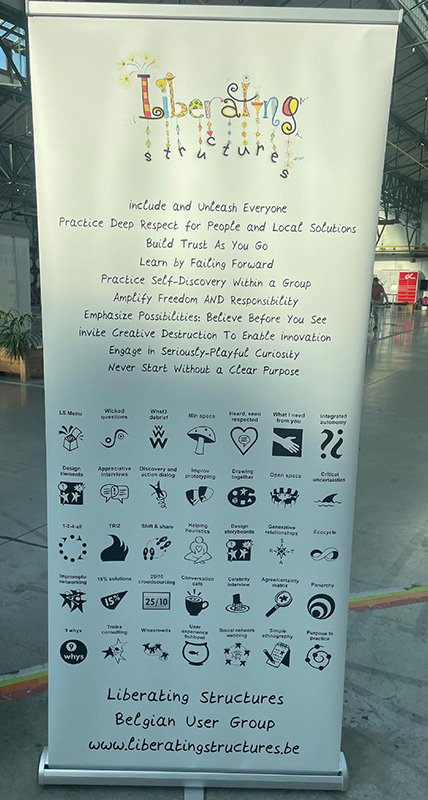
The first one I want to share with you is Liberating Structures,
which is a simple yet powerful way to increase participation and collaboration.
What Are Liberating Structures?
And Why Should You Care?
If you’ve ever sat through a meeting where just a few voices dominated — or facilitated a session where engagement fell flat — Liberating Structures (LS) offer a refreshing alternative.
Liberating Structures are a collection of simple, easy-to-learn interaction methods that give everyone a chance to contribute, no matter the setting. Instead of relying on traditional formats like presentations or open discussions (where a few people often do most of the talking), LS are designed to unleash the collective wisdom of a group.
How Are They Used?
Training design: LS create learning experiences that are interactive, inclusive, and practical. Whether teaching leadership, conflict management, or customer service, they turn passive learners into active participants.
Meeting design: LS make meetings more productive by encouraging creative problem-solving, deeper listening, and shared ownership of outcomes.
Team development: LS foster trust, strengthen relationships, and help teams surface new ideas and solutions together.
Why They Matter
In a world where time is tight and attention is short, Liberating Structures help people work smarter together. They are simple to apply, but powerful in impact — creating environments where everyone can contribute, innovate, and feel heard.